
Chlorine vs Bromine: Which Is The Best Hot Tub Sanitiser?
In this article, we delve into the specifics of Chlorine vs Bromine, helping you to make an informed decision on which is the best Hot Tub sanitiser for you.
24th November 2025
Maintaining the cleanliness of your Hot Tubs water is paramount to ensuring a healthy and enjoyable soaking experience.
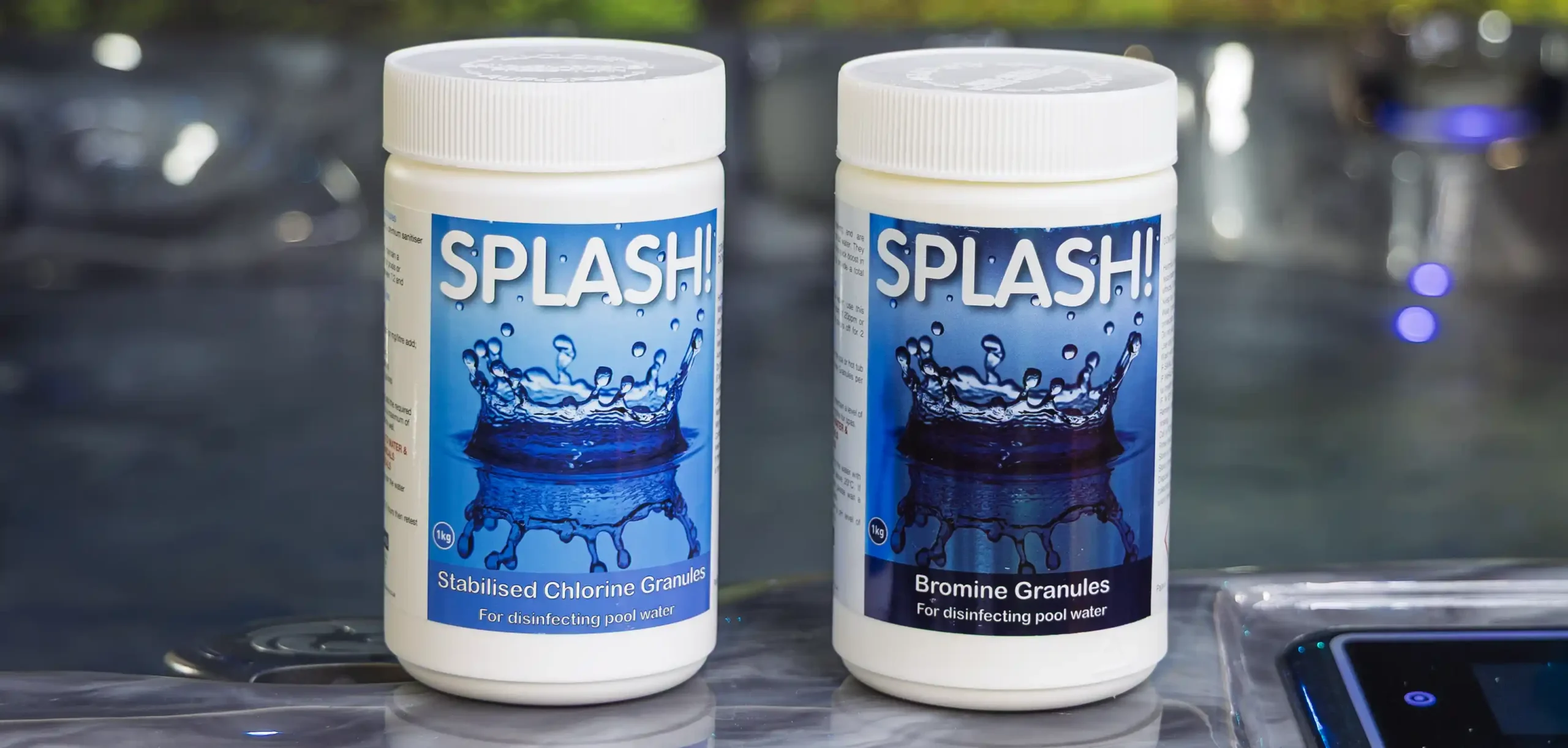
The two most commonly used sanitising agents for this purpose are Chlorine and Bromine which are the only sanitisers for Hot Tubs that are recommended by BISHTA. Its long been debated whether Chlorine or Bromine is the superior Hot Tub sanitiser, with each having its own set of benefits.
Why Do Hot Tubs Need Sanitising?
Before diving into the differences between Chlorine and Bromine, it’s crucial to understand why Hot Tub sanitation is needed in the first place.
Hot tubs, particularly those used frequently and by multiple people, are susceptible to contamination by bacteria, viruses, and other undesirables. This contamination can be introduced through various means, including from bathers, and wind-blown debris.
Without proper sanitisation, these contaminants can multiply and potentially lead to severe health conditions such as Legionnaires’ disease. Therefore, using effective sanitising agents is essential to keep your Hot Tub water clean and safe.
Chlorine as a Hot Tub Sanitiser
Chlorine is a well-known sanitising agent and commonly used in public swimming pools. It is lauded for its rapid bacteria elimination properties. However, it’s essential to understand how Chlorine works and its implications for Hot Tub use.

How Chlorine Works
Chlorine’s sanitising action is a result of a chemical reaction known as Oxidation. During this process, Chlorine interacts with the membrane of the contaminant’s cell, affecting its chemical bonds. This interaction results in the destruction of the contaminant, converting the contaminated water in your Hot Tub into safe sanitised water.
Types of Chlorine for Hot Tub Use
Chlorine comes in various forms, such as granules and tablets. The most effective type of chlorine for Hot Tubs is Sodium Dichlor, which is available as granules. There are also Chlorine tablets made of Trichlor which are highly acidic and can deteriorate the Hot Tub coating.
Effectiveness of Chlorine in Hot Tub Sanitation
Chlorine is highly effective in sanitising Hot Tub water, rapidly eliminating contaminants. However, it dissipates quickly, making more frequent applications necessary.
Dosage and Frequency of Chlorine Application
The effectiveness of Chlorine-based products in Hot Tubs relies on maintaining specific Chlorine levels in combination with appropriate water pH levels. The recommended free Chlorine concentration for Hot Tubs is 3-5 ppm (parts per million). This level should be combined with a water pH between 7.0 and 7.6.
Health Implications of Chlorine Use
If used correctly, Chlorine does not cause health issues. However, people with sensitive skin or allergies to Chlorine should avoid using Chlorine-based products. Some common health issues caused by a reaction to Chlorine use are skin rashes and eye irritation.
Bromine as a Hot Tub Sanitiser
Bromine is a popular alternative to Chlorine for Hot Tub sanitisation. It is particularly favoured by those with allergies to Chlorine or sensitive skin. To understand if Bromine is the right choice for you, we need to delve into how it works and its implications for Hot Tub use.
How Bromine Works
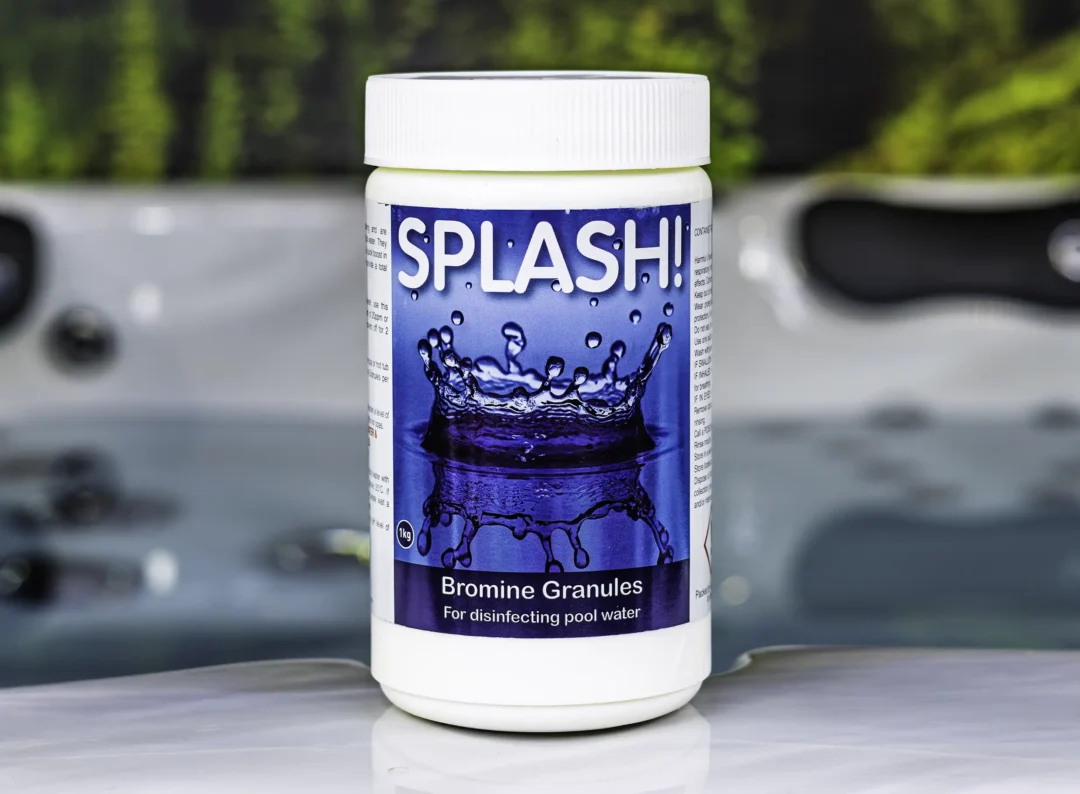
Bromine sanitises Hot Tub water through a process known as Ionisation. This process involves breaking down bacteria and other pathogens to the extent they can no longer survive, thereby sanitising the water.
Types of Bromine for Hot Tub Use
Like Chlorine, Bromine is available in various forms, including granules, tablets, sticks, and salts. The easiest way to use Bromine in your Hot Tub is by placing it into a diffuser, which provides a steady, prolonged release.
Effectiveness of Bromine in Hot Tub Sanitation
Bromine dissolves in water slower than Chlorine, resulting in a slower sanitisation process. However, it remains effective for a longer period, reducing the need for frequent applications.
Dosage and Frequency of Bromine Application
To ensure optimal sanitisation, Bromine levels should be maintained between 2 and 4 ppm. Levels below 2 ppm can lead to inadequate sanitisation, while levels above 4 ppm can pose health risks.
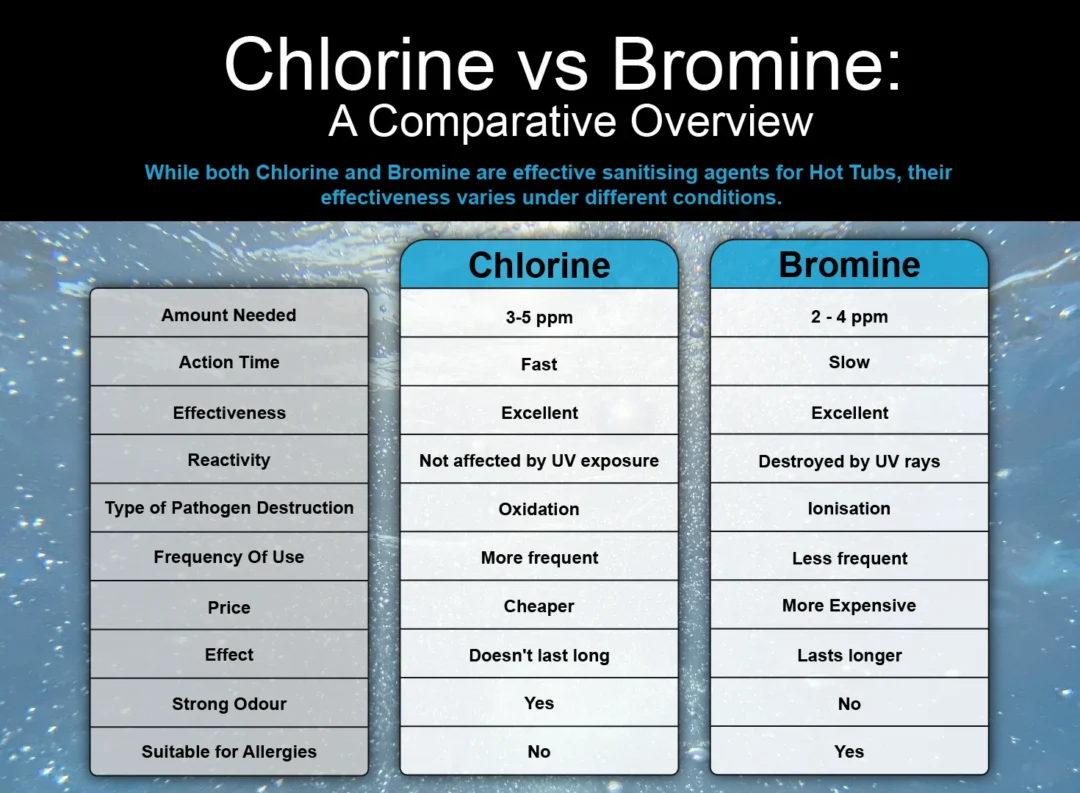
Both Chlorine and Bromine are highly effective sanitising agents for Hot Tubs. The choice between the two will depend on your specific needs and circumstances. Ultimately, ensuring your Hot Tub is adequately sanitised is the most crucial aspect regardless of whether you choose Chlorine or Bromine.
Always follow the manufacturer’s instructions when using sanitising chemicals for your Hot Tub. Also, remember to regularly test your Hot Tub water to ensure the sanitiser level remains within the recommended range.
Expert Advice & Inspiration
Explore Our Featured Spa Guides

Stay informed with the latest tips, maintenance advice, and buying guides from our spa experts. Discover how to get the most from your hot tub, swim spa, or sauna.