

Latest Posts
Discover American Whirlpool
When you choose an American Whirlpool Hot Tub, you’re not just buying a spa, you’re investing in over half a When you choose an American Whirlpool Hot Tub, you’re not just buying a sp, you’re investing in over half a century of engineering, wellness expertise, and innovation.
MAAX® began in 1969 with the creation of modern fibreglass and metal. From the start, MAAX® focused on lasting quality, innovation, and customer satisfaction. These principles helped them become a leading manufacturer of Hot Tub & Swimspas.
Over the years, MAAX® grew and acquired companies like Coleman™ Spas, Savannah, Vita Spas, and Infiniti. In 2018 MAAX Spas merged with American Bath Group, creating a strong synergy between bath and Hot Tubs. A year later n 2018 MAAX Spas launched the American Whirlpool brand. Although the name has changed, the dedication to quality and innovation remains unchanged.
What Makes American Whirlpool Different?
Ultimate Comfort
American Whirlpool understand comfort. For over 40 years they have crafted the world’s most comfortable Hot Tubs with patented features like the zero gravity Performance Seat™ and Zone Therapy®. Seats are designed to fit various shapes and sizes, ensuring you find the perfect one. Drawing on decades of research and design in industries focused on human form, their Spas are engineered to balance ergonomic support, water pressure, jet position, and body buoyancy. Deep immersion seating offers ultimate comfort, while armrests and Foot Relief Zones® are contoured to your body.
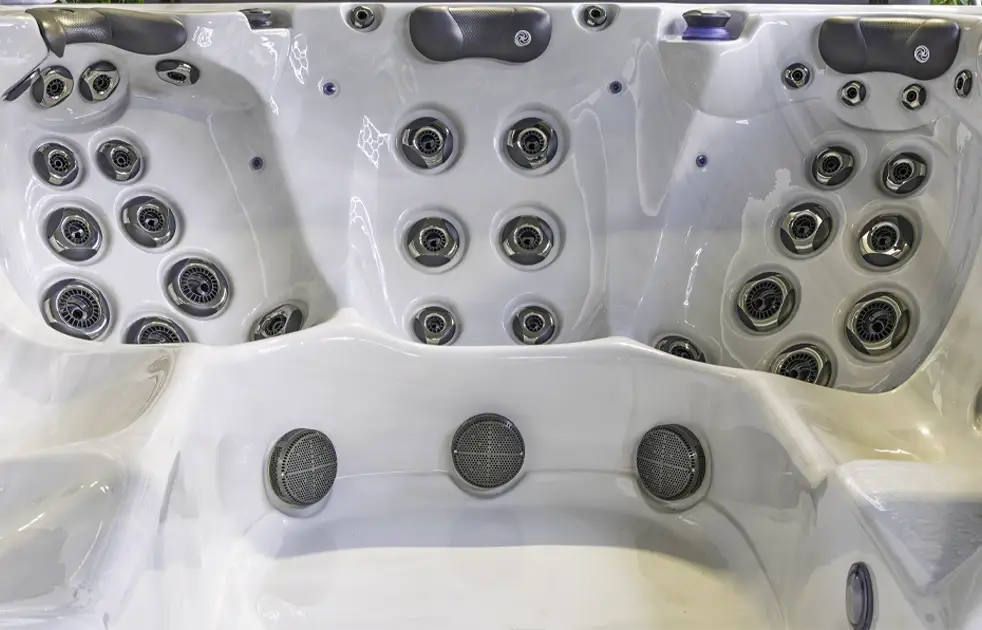
Physician Designed Zone Therapy
Zone Therapy® uses strategically placed jets to target specific pain zones with muscular trigger points. More jets don’t always mean a better massage. Correctly positioning the right size jet and massaging action where they are most effective is crucial to relieving pain and stiffness throughout the body. The Zone Therapy® concept has been developed by medical experts in physical rehabilitation and massage therapy.
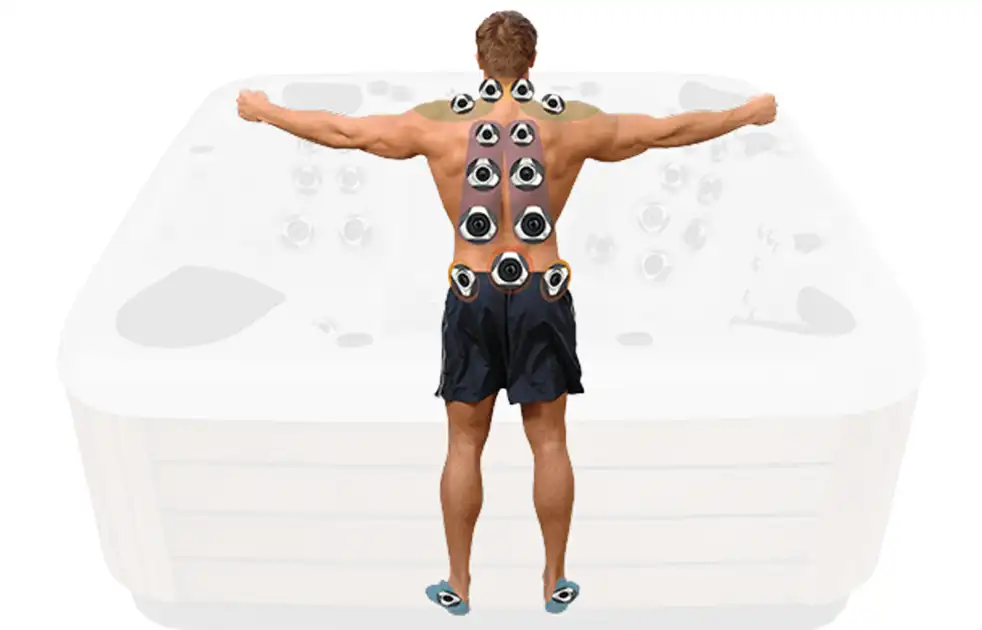
Performance Seating
Performance Seating ensures American Whirlpool Hot Tubs are the most comfortable you can buy. Each seat is crafted for full body immersion and correct posture, aligning with the jetting pattern for comfort and ultimate jet performance. The seat’s shape and dimensions are engineered to match the spine’s curvature, promoting proper posture and reducing lower back stress.
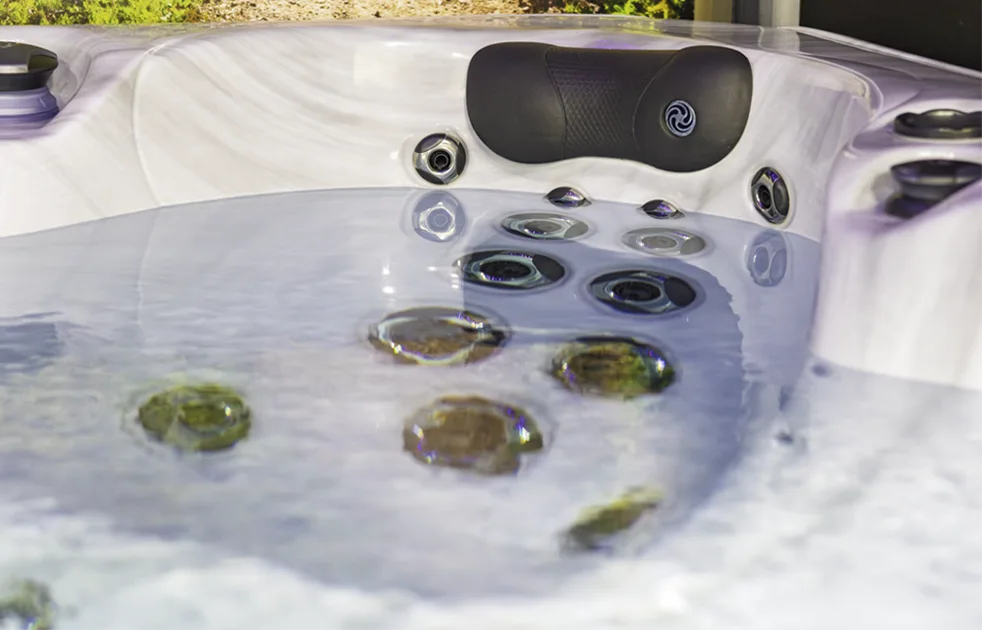
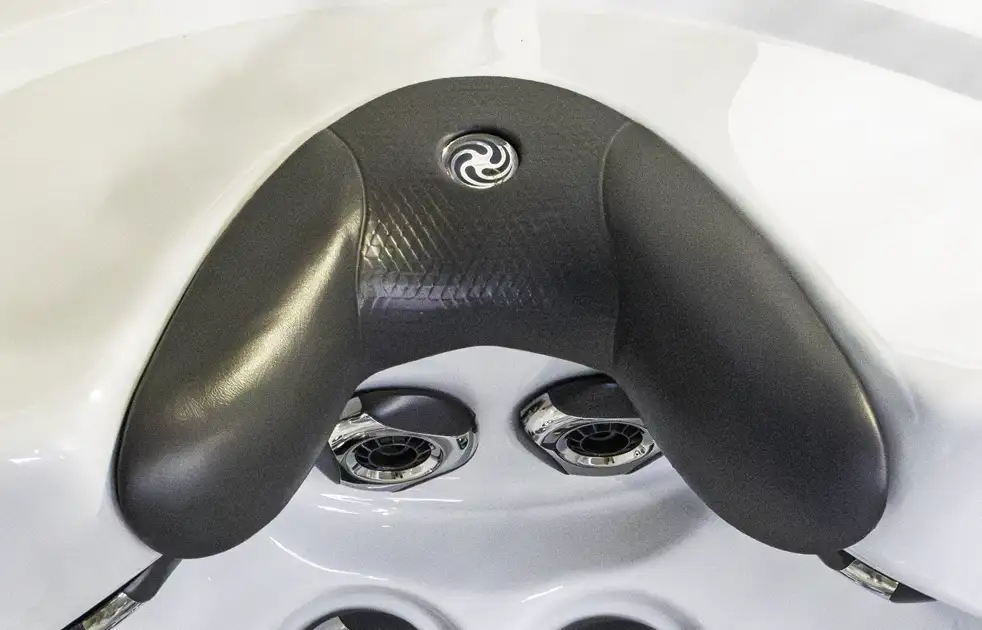
Comfort Collar
A neck massage therapy system is among the most soothing features in a Hot Tub. The reverse-moulded Comfort Collar’s unique cushion supports your neck, gently cradling your head while adjustable cyclone jets massage neck and shoulder muscles. The Comfort Collar® also provides a relaxing massage above the water line.
Appliance grade
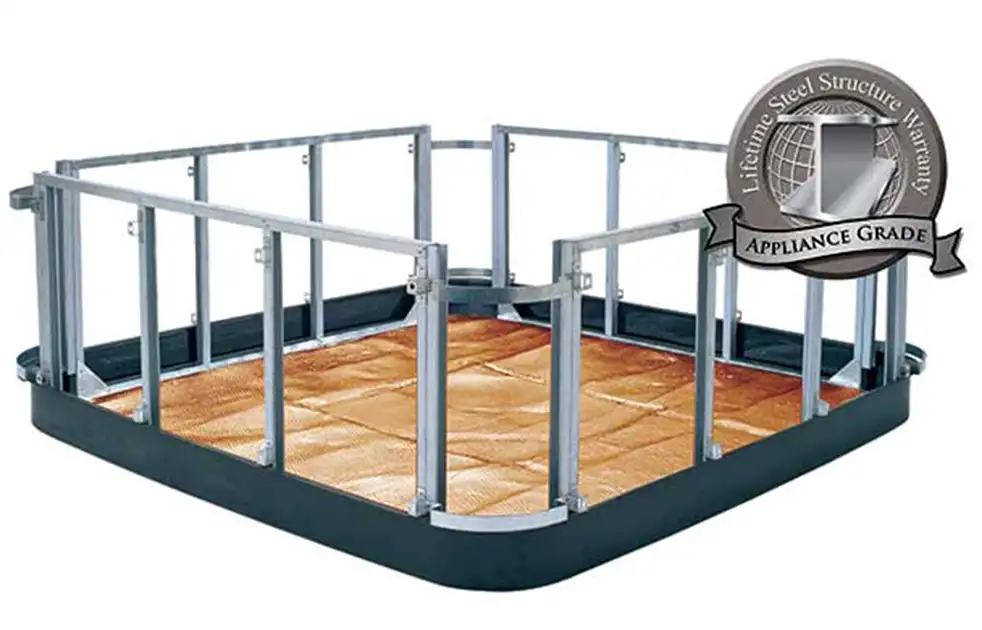
The steel frame and Northern Exposure® Insulation in American Whirlpool® Hot Tubs enable full servicing of the entire structure and all its mechanical components. Essentially, the Spa can be maintained and restored to factory standards in your garden for as long as you own it. This is called “Appliance Grade™,” as the Hot Tub is constructed to the same service and safety standards as other major household appliances.
Northern Exposure® & BlueMAAX® Insulation
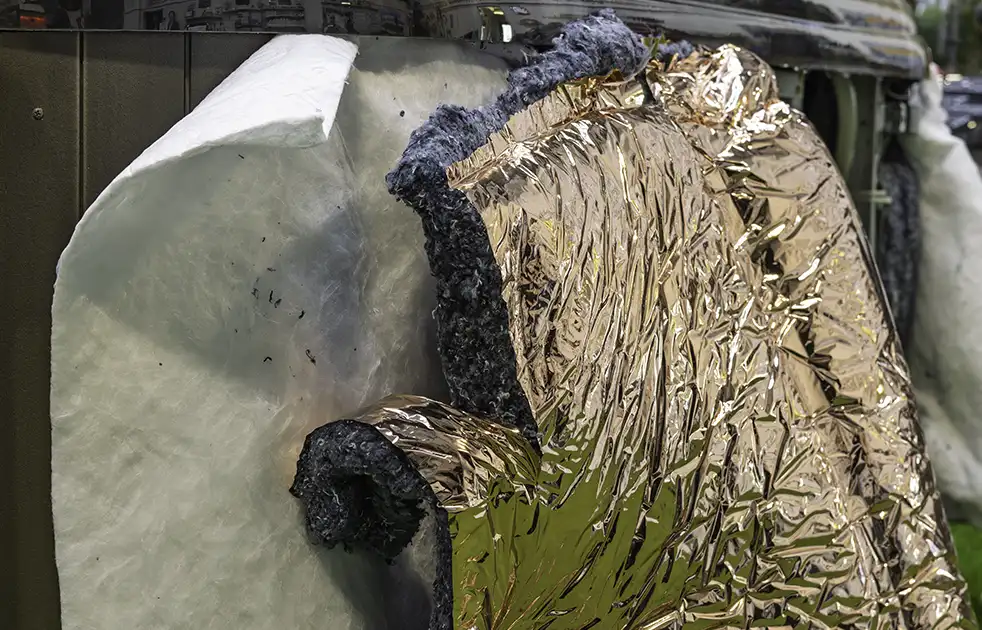
Northern exposure® patented thermal barrier technology reuses the free heat energy for more efficient heating and reduced energy costs. All four sides of the Hot Tub, along with the floor and cover, are lined with reflective copper material to bounce radiant heat energy created by the pumps back into the Spa. Heat is reabsorbed into the plumbing, aiding in raising and maintaining water temperature. Lastly, the entire exterior of the Hot Tub is wrapped in 3M Thinsulate™ Insulation, the same remarkable material used in winter clothing. This three-layer patent-pending system ensures the heat energy produced by the Hot Tub remains in the Hot Tub.
ABS Sealed Base
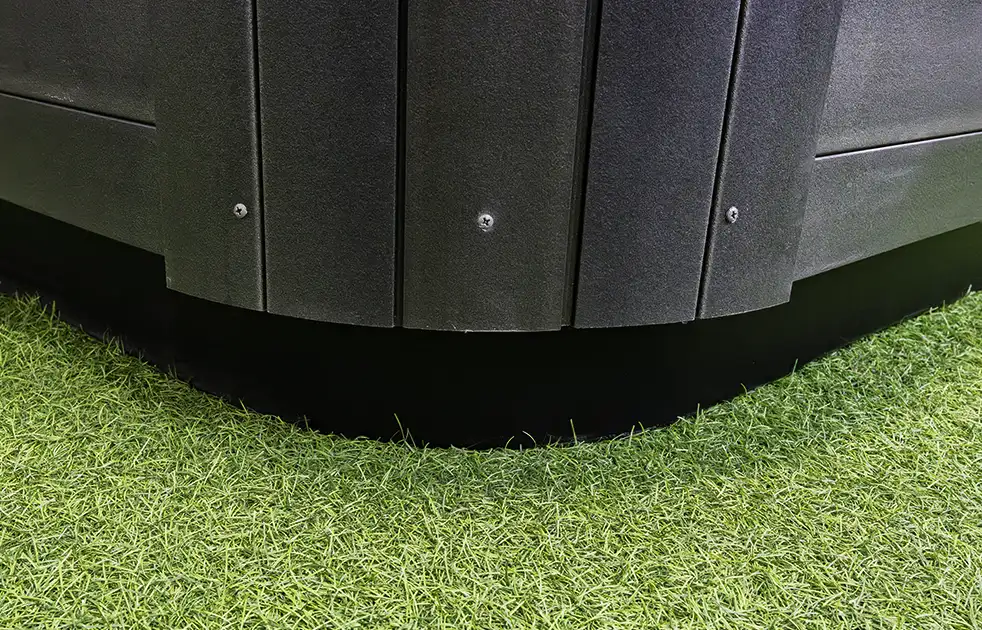
The ABS Sealed Base is an integral part of the support structure in an American Whirlpool® Hot Tub. Its single-piece design offers a sturdy base that insulates the bottom of the Hot Tub, retaining heat, and keeping moisture and rodents out.
WeatherShield Insulating Cover
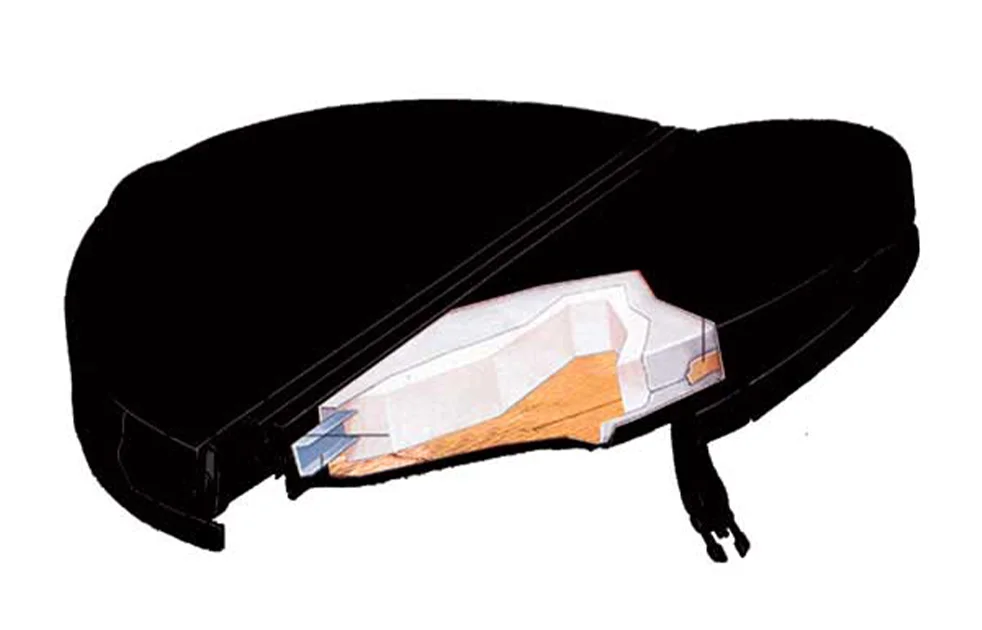
Insulating and covering your hot tub is extremely important. American Whirlpool’s premium-grade insulating covers contain a unique copper lining, removable heat-sealing pillows to vent excess heat during warmer weather, and a tailored fit to keep in heat during colder weather.
The WeatherShield™ cover material withstands harsh weather while remaining light in weight. Strong stitches result in less tear-outs, and they offer superior sun and fade resistance.
CleanZone
The CleanZone® water purification system will keep your water healthy and clear, cutting down on chemical upkeep. CleanZone® is a cartridge oxidiser that produces oxygen and purifies your Hot Tub water.
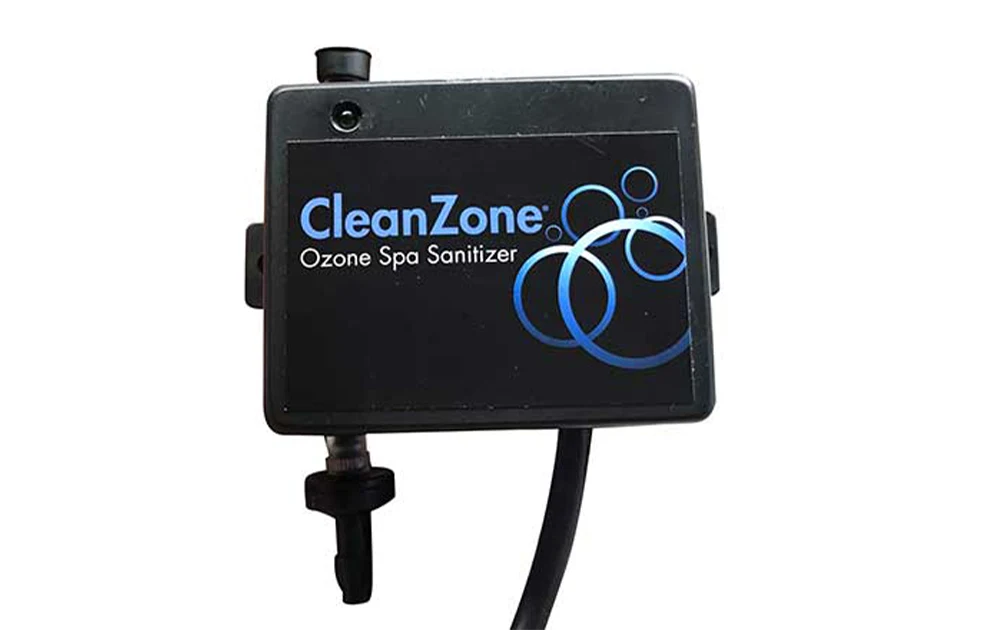
American Whirlpool Hot Tubs & Swimspas are built to last and offer the ultimate blend of luxury, comfort, and therapeutic benefits. Whether you’re looking for a Spa experience that helps you unwind, reduce pain with hydrotherapy, or spend time with family and friends, American Whirlpool Hot Tubs are the perfect choice. With their advanced technology, ergonomic design, and durability, they are the best Hot Tubs in the market.
Read MoreMeet Tuff Spas, The Strongest Hot Tubs on the Market
If you’re looking for a Hot Tub that combines durability, energy efficiency, and low maintenance, look no further than Tuff Spas. Manufactured in the USA, Tuff Spas are built to meet the highest standards for both commercial holiday lets and domestic use.
Who Are Tuff Spas?
Founded in 1999 and now part of LPI Inc, Tuff Spas have earned a reputation for producing some of the most robust and durable Hot Tubs available. Their UK models are engineered specifically to meet British climate conditions and exceed the latest HSG282 health and safety regulations, making them ideal for private gardens and holiday rentals alike.
As the world’s number one Rotomoulded Hot Tub brand, Tuff Spas deliver long-lasting performance with minimal fuss.
What Makes Tuff Spas Different?
At the heart of every Tuff Spa is simplicity, strength, and sustainability: Rotomoulded Construction
Unlike traditional acrylic Hot Tubs, Tuff Spas are made from Rotomoulded high-density polyethylene. This creates a one-piece shell that’s incredibly durable, impact-resistant, and virtually indestructible.
Lifetime Tuff Top™ Covers
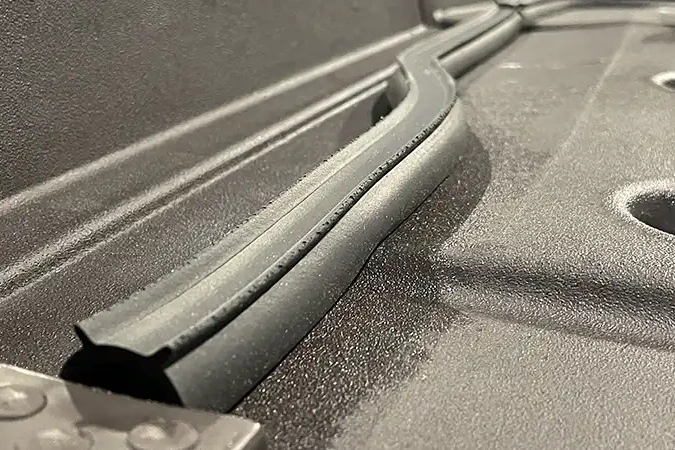
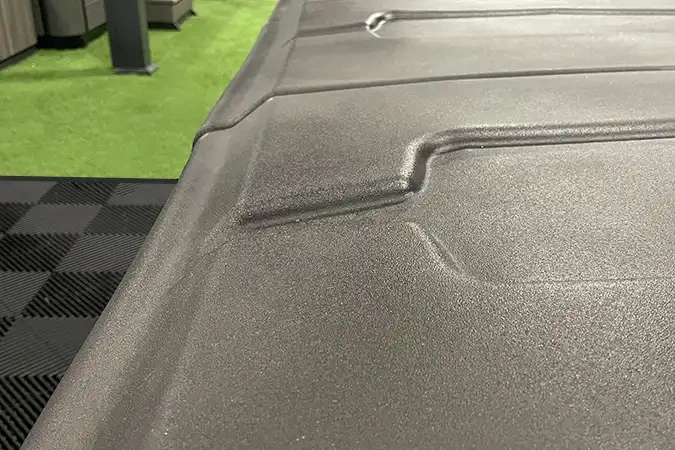
Say goodbye to saggy vinyl lids. Tuff Spas’ patented Tuff Top hard covers are integrated into the Hot Tub and engineered to support over 500 kg in weight. They’re fully insulated and gasket-sealed to retain heat and reduce running costs. Not that you will need it but they come with a lifetime warranty.

Plug & Play Simplicity
All models including the popular TT150 and TT450, are 13-amp plug-and-play, meaning no expensive electrical work is required.
Energy Efficient Design
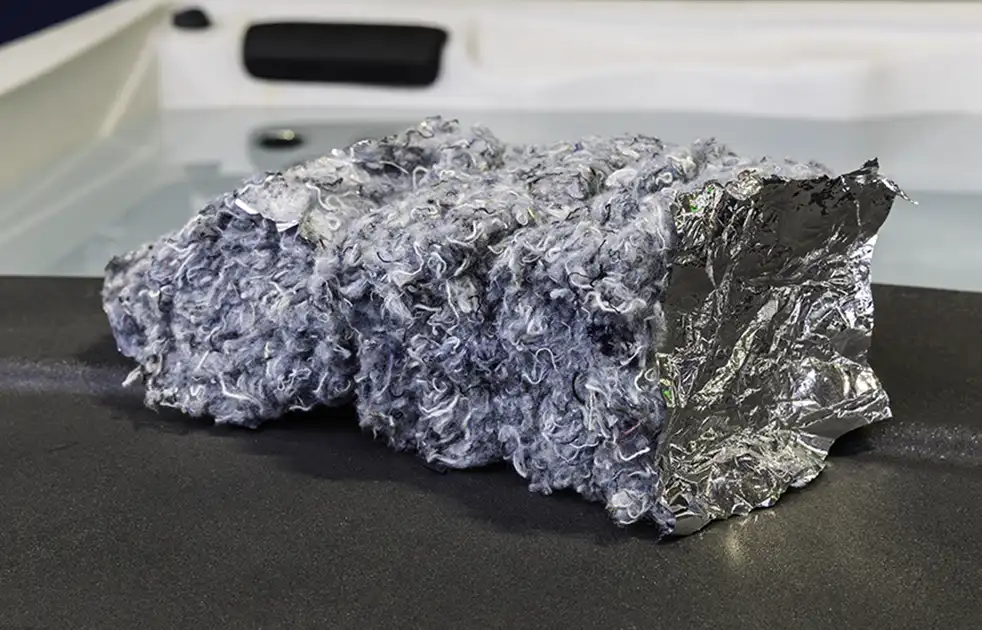
With removable, recycled denim insulation and compatibility with heat pumps, Tuff Spas are some of the most energy-efficient Hot Tubs on the market. Their smart design helps keep running costs down without compromising performance.
Built for HSG 282 Compliance
Designed to exceed the requirements for commercial use, Tuff Spas include features like no dead legs in pipework, rapid filtration (under 8 minutes), and removable headrests, making them a trusted choice for holiday homes and rental properties.

Simple. Durable. Reliable. That’s the Tuff Spas promise. Explore the range today and discover just how tough a Hot Tub can be.
Read MoreThe Benefits of Rotomolded Hot Tubs
Hot Tubs are well known for the relaxation and luxury they offer, but not all Hot Tubs are created equal or even manufactured in the same way.
When most people think of a Hot Tub they picture the classic Acrylic Spa, but there is another type of Hot Tub that has gained popularity in recent years for its combination of durability and price, the Rotomolded Hot Tub.
In this article, we will explore the benefits of Rotomolded Hot Tubs and why they are considered the strongest type of Hot Tub.
What is a Rotomolded Hot Tub?
A rotomolded hot tub is manufactured in a specific way, it’s rotomolded.
During the manufacturing process, Polyethylene powder is melted and rotated in a mould to evenly distribute the melted plastic. This creates a solid one-piece seamless Hot Tub.
While not all rotomolded hot tubs are built to the same standard, they are fully capable of having all the features of an acrylic spa.
The Good and the Bad
Advantages of Rotomolded Hot Tubs
Exceptional Durability
The key advantage of a Rotomolded Spa is their exceptional durability, this is where Rotomolded Hot Tubs excel as the strongest type of Spa on the market. Because Rotomolded Hot Tubs are made from high-density polyethylene they incredibly durable, resistant to impact, cracking, and warping. A Rotomolded Hot Tub can withstand years of use without losing its structural integrity.
Lightweight construction
Not only are they strong, Rotomolded Spas have a lightweight construction. Unlike other types of Spa which can be heavy and difficult to move, Rotomolds are lightweight and portable. The lightweight design means that they can be installed on a variety of surfaces, including decking and patios without a solid concrete base, and can be relocated from time to time.
Cost-effectiveness
While Rotomolded Hot Tubs offer durability and luxury, they are also known for their cost-effectiveness. Compared to other types of Hot Tubs, such as Acrylic or Wooden Spas, Rotomolded Hot Tubs are generally more affordable. This is due to the manufacturing process, which is less expensive than other methods used to produce Spas.
Feature packed
While Rotomolded hot tubs are known for their durability, they do not compromise on luxury features. Manufacturers like Tuff Spas have recognised the demand for a combination of durability and luxury, and as a result many now come equipped desirable features like hydrotherapy jets and lighting.
Disadvantages of Rotomolded Hot Tubs
The list of advantages for buying a Rotomolded Hot Tub is high, but are there any disadvantages?
The only real disadvantage to them is that some people don’t consider them as attractive as acrylic spa’s. However, in recent years, leading manufactures like Tuff Spas are changing this. You can now so you have all the benefits of an rotomolded spa in an aesthetically pleasing shell.
How Do They Compare To Other Types of Hot Tub
So how do Rotomolded Hot Tubs compare against other types of Spa? let’s have a look.
Acrylic Hot Tubs
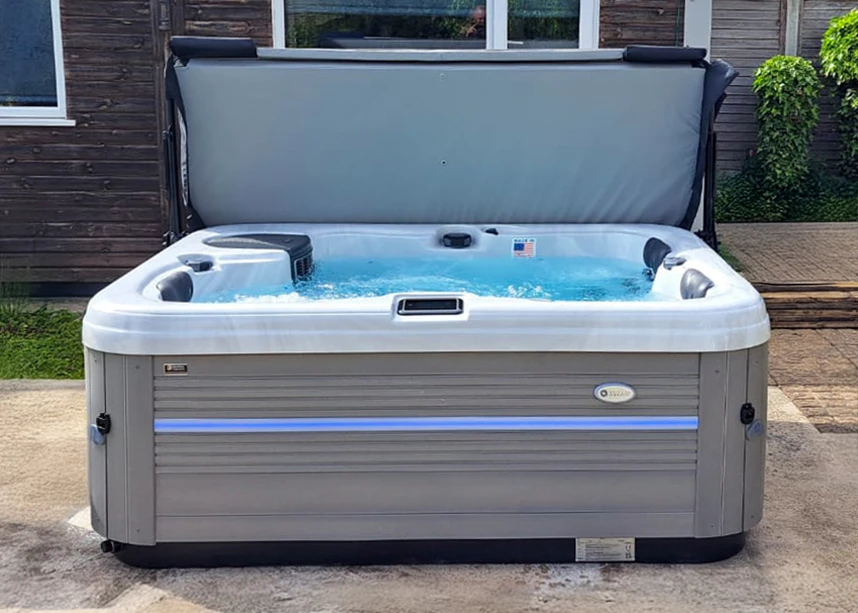
When most people think of a Hot Tub they think of an Acrylic Spa known for their sleek looks and luxury features. The only real difference between an Acrylic Hot Tub and a Rotomolded Hot tub is the appearance due to the manufacturing process. Rotomolded Hot Tubs aren’t as sleek and shiny, but they are more durable, lighter, and like for like cheaper.
Inflatable Hot Tubs
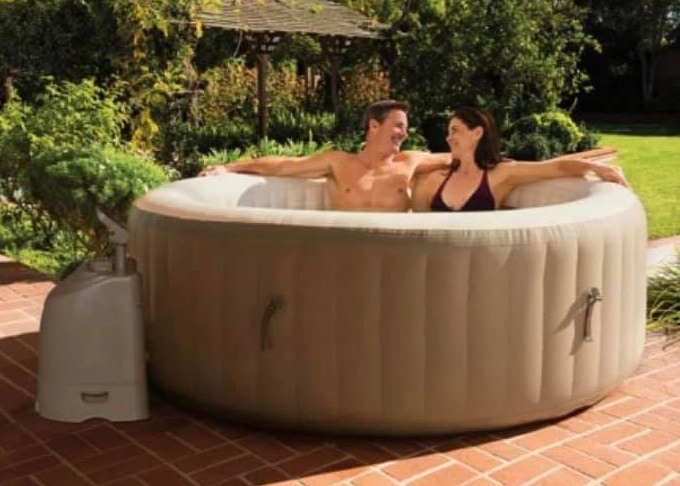
The upfront cost of an inflatable Hot Tub is considerably less than any other type of Spa. The downside to this is they are by far the most expensive Hot Tubs to run and have far fewer features if any. A Rotomolded Hot Tub will be much cheaper to run, give a far better Spa experience, and last immeasurably longer.
Wooden Hot Tubs
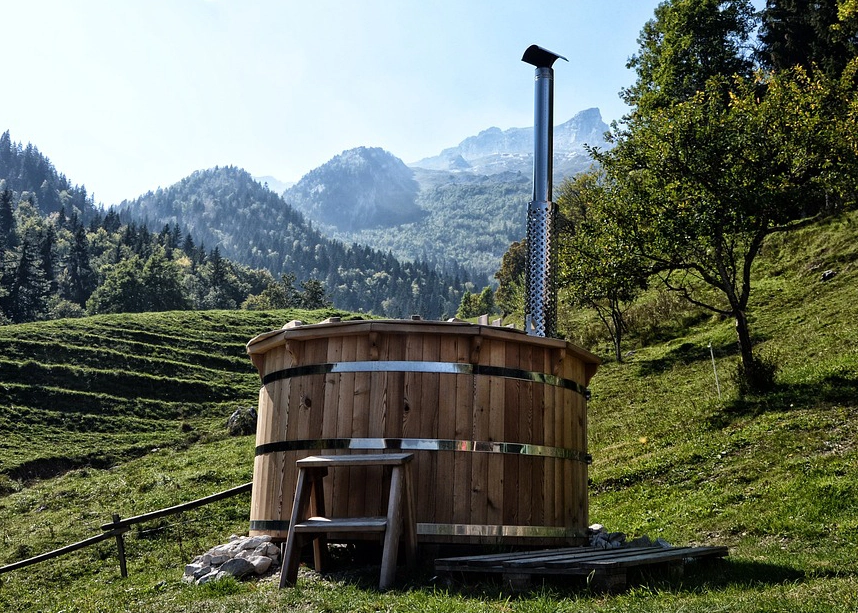
Known for their rustic looks, Wooden Hot tubs are popular in off grid destinations, despite the lack of features, temperature control, and more often than not lack of HSG 282 compliance. Rotomolded Hot Tubs offer everything they don’t including full HSG 282 compliance in many models, ideal for Holiday Lets.

Are Rotomolded Hot Tubs good for Holiday Lets?
Rotomolded Hot Tubs are the ideal Hot Tubs for Holiday Lets and other business use.
They can offer all the function of an Acrylic Spa with the addition benefit of the exceptional durability. Tuff Spas even go one step further with the patented Tuff Top lid made from the same polyethylene material as the rest of the spa, complete with a lifetime warranty and the ability to hold up to 500 kg, so you’ll never need to replace your lid.
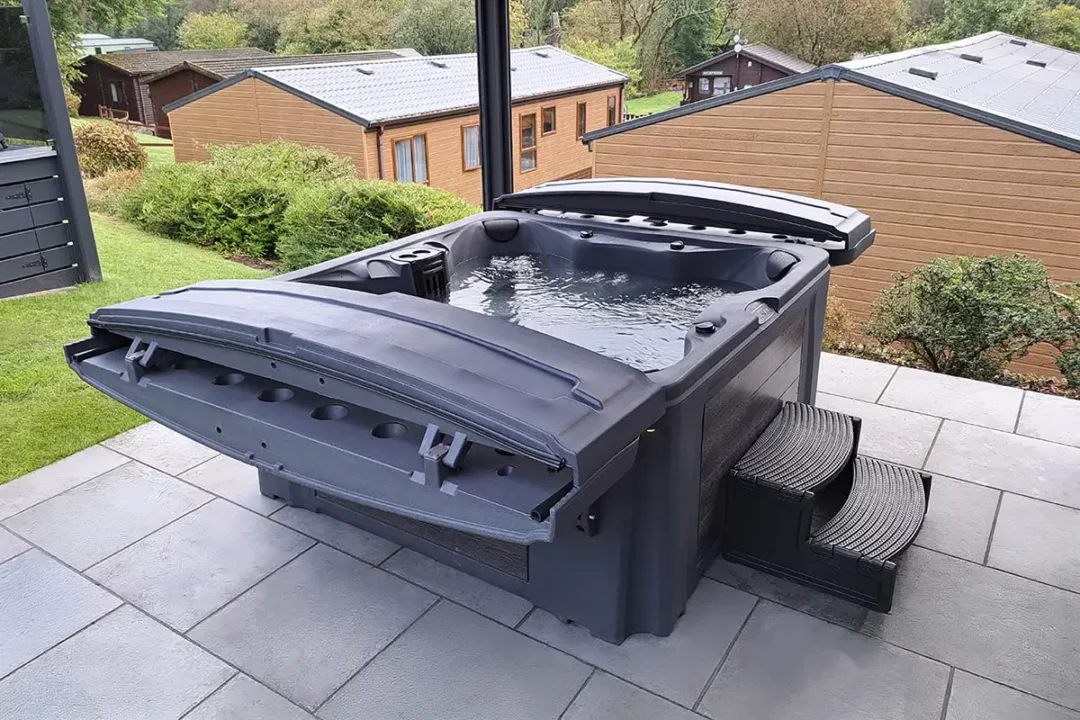
Rotomolded Hot Tubs offer a unique combination of durability, luxury, and cost effectiveness . This makes them an excellent choice for those seeking a relaxing and long-lasting Hot Tub experience. Perfect for Holiday lets or private homes, with their exceptional durability. Rotomolded Hot Tubs can withstand years of use without losing their structural integrity. With a Rotomolded you can trust that your Hot Tub will remain in pristine condition and withstand the test of time.
Read MoreWhy Tuff Spas Are The Ultimate Hot Tubs For Holiday Lets
Investing in a Hot Tub for your holiday let is one of the best ways to increase revenue but can take a considerable amount of time, resources, and financial outlay so It’s important to make sure you get the right Hot Tub.
We don’t simply say that Tuff Spas are the best Holiday Let Hot Tubs, we show you why they are by breaking down all the reasons and specific features, explaining why they’re so important in a business setting.
There’s many things to consider such as running costs, durability, compliance to health and safety, and that’s before you even start looking at specific models and features.
Lets get started and jump right into it and show you why Tuff Spas are the Ultimate Hot Tubs.
Reason 1 – Tuff Tops
The first thing people comment on when they see a Tuff spa is the Tuff Top lid. If you’ve already owned or worked with a Hot Tub on a Holiday Let, you will know how quickly traditional vinyl lids can need replacing. We frequently have customers coming to us who are having to replace a traditional Hot Tub covers twice a year or more and at cost of around £500 a time, it can cut into profits very quickly. With a Tuff Spa you will never need to replace a Hot Tub cover again!
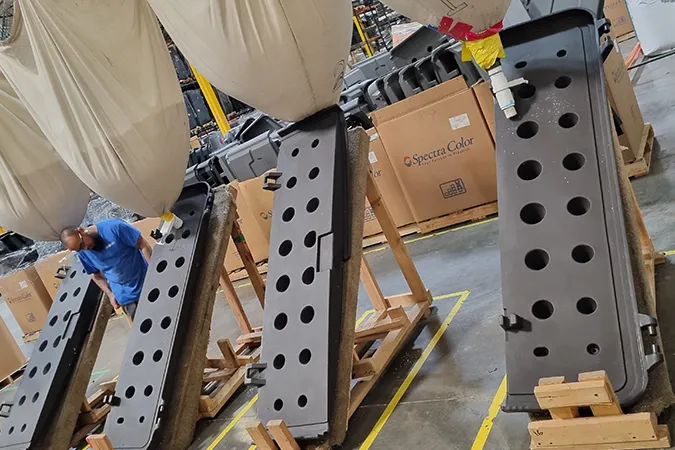
Tuff Spas have a patented, Tuff Top lid that’s you can’t get on any other Hot Tub. They can easily be operated by one person but are still super strong and can take 500 kg of weight. Not only are they the most durable covers on the market, due to the perfect fit, seals, and insulation, they keep heat from escaping and cold air from getting in, so your running costs stay down.
They even come with a lifetime warranty, not that you need it.
Reason 2 – Super Strong Rotomolded
Tuff Spas are manufactured differently from most other Hot Tubs, they’re Rotomoulded.
Rotomolded Hot Tubs offer several advantages that set them apart from other types of Spas. One of the key advantages is their exceptional durability and this is where Rotomolded Hot Tubs excel as the strongest type of Spa on the market. Rotomolded Hot Tubs are made from a high-density polyethylene material that is incredibly durable.
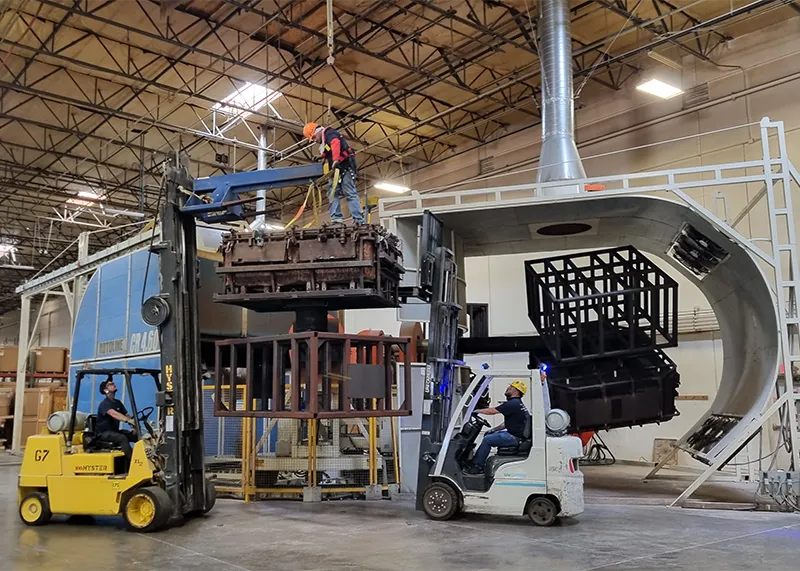
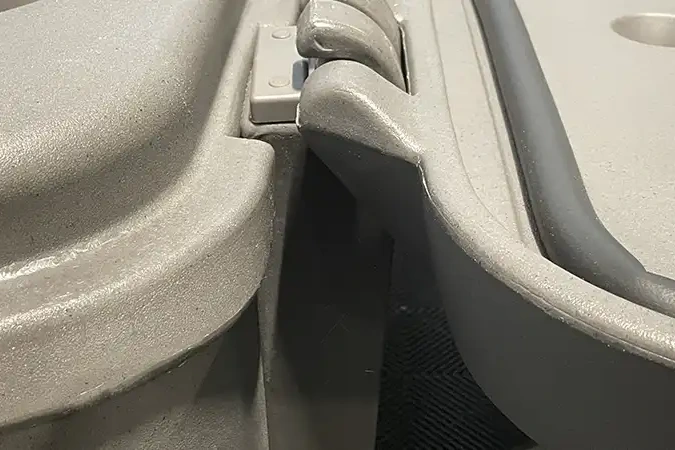
During the manufacturing process, Polyethylene powder is melted and rotated in a mould to evenly distribute the melted plastic. This creates a solid one- piece seamless Hot Tub that is resistant to impact, cracking, and warping. A Rotomolded Hot Tub can withstand years of use without losing its structural integrity.
Not only are they strong, Rotomolded Spas have a lightweight construction. Unlike Acrylic Hot Tubs, which can be heavy and difficult to move, Rotomolds are lightweight and portable. The lightweight design means that they can be installed on a variety of surfaces. You can install on decking and patios without a solid concrete base.
With Rotomolded you can trust that your Hot Tub will withstand even the rowdiest of guests and pass the test of time.
Reason 3 – HSG282 Compliant
Holiday lets with Hot Tubs present a unique set of challenges for owners. One such challenge is ensuring that their Hot Tubs comply with the Health and Safety Executive’s guideline HSG 282
Worrying there is a lot of misinformation and unsubstantiated claims relating to HSG 282, often from unscrupulous Hot Tub businesses trying to pass of Hot Tubs as HSG 282 compliant that clearly aren’t.
All Tuff Spas are designed in the UK to exceed HSG282 regulations.
- Removable Insulation
- No Deadlegs
- Filters all water in under 15 mins
- Over 250 Litres Per Bather
- Removable Headrests
- In-Line Filter
Reason 4 – Energy Efficient And Green
Energy efficient features & earth friendly manufacturing process.
- Industry leading insulation reduces energy use and running costs
- All waste and trim pieces are recycled and reused
- Lifetime warranty on the shell that will not end up in a landfill
- No volatile organic compounds like other spas
- No resin blown in manufacturing like other spas
- Fewer emissions in manufacturing than other spas
- One piece, heat-retaining shell improves energy efficiency
- Hard-top cover with industrial gasket seals preventing heat loss
- Made using natural gas, which is the cleanest burning fuel
- Material is recyclable
- No Fibreglass is blown, unlike other spas

Reason 5 – Fast Draining
Emptying a Hot Tub can be a lengthy process and, on a Holiday let it needs to be done between every set of guests for HSG 282 compliance.
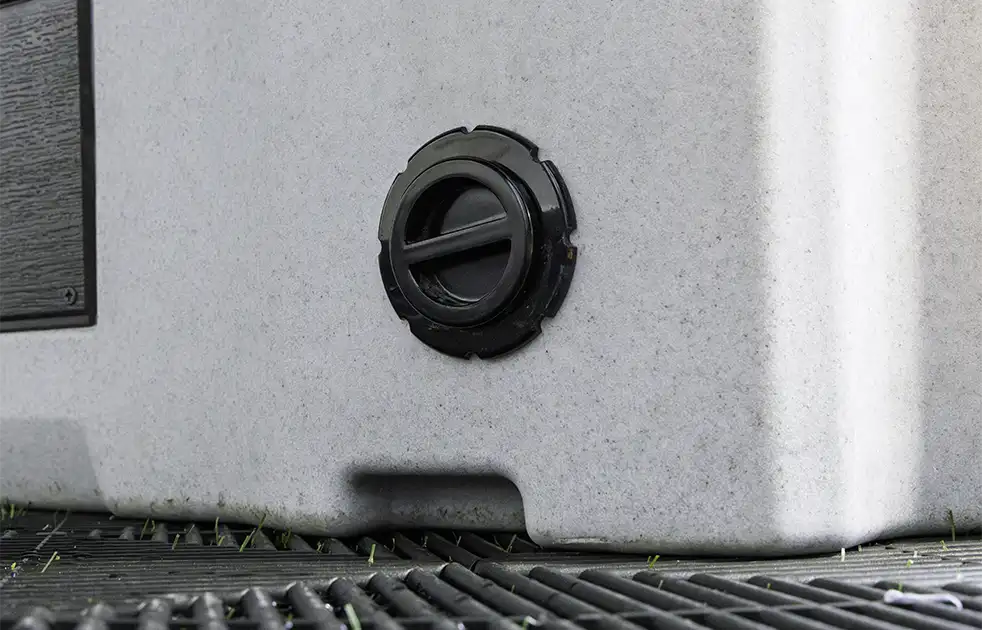
To make life easier, every Tuff Spa has an ultra-fast 1.5” quick drain fitted in the bottom of each Hot Tub that speeds up change over times.
Reason 6 – The Same Filter
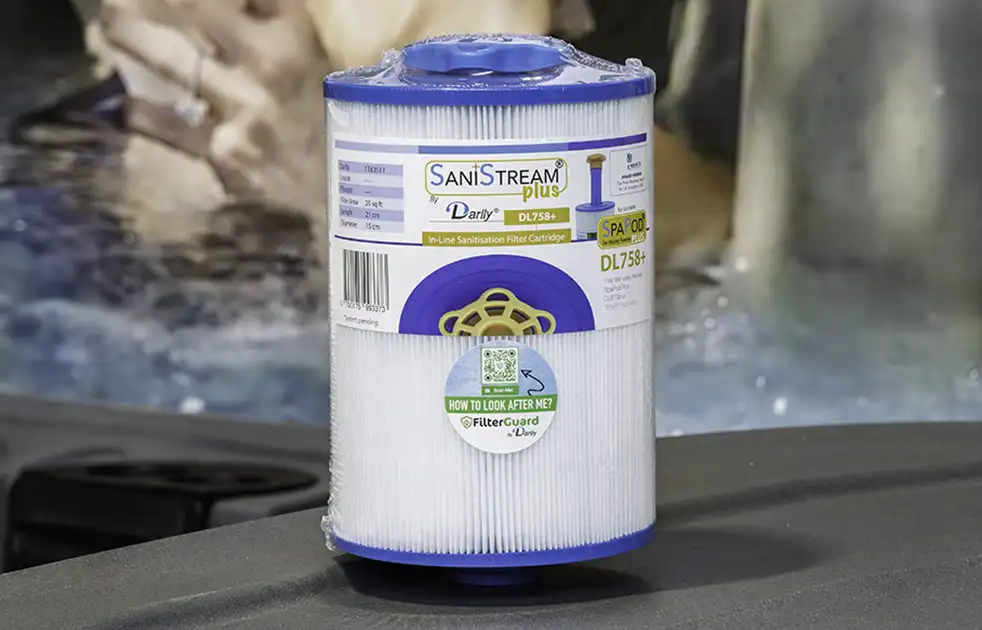
If you have several Hot Tubs on site you will know the hassle it can be when it comes to changing filters. Making sure you have the right one for each model can be a real pain.
It doesn’t need to be troublesome though as every Hot Tub in the Tuff Spa range now has the same filter to make things much simpler.
Reason 7 – Removable Insulation
The importance of Hot Tub insulation to reduce energy consumption is well documented, but for business use it needs to go a step further, for maintenance and HSG282 compliance, it needs to be fully removable.
Tuff Spas insulation is also made from recycled denim and foil, super energy efficient and really easy to remove and replace when it’s time to service the Hot Tub.
Reason 8 – Large Single Access Hole
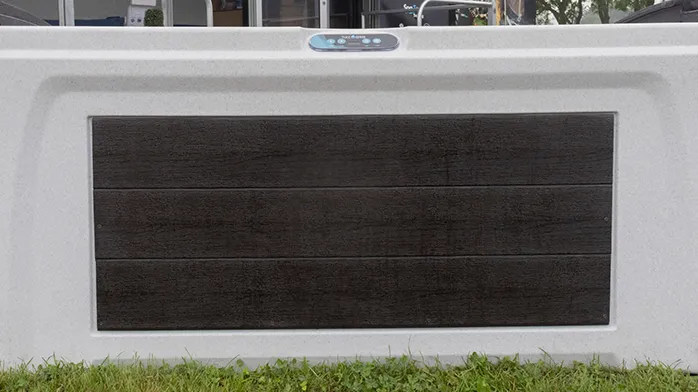
All models come with large access panels on each side of the spa which allows for easy access to the Spas equipment, including the pump, heater, plumbing, jets, and electrics. This makes any maintenance on the Hot Tub simple and easy.
Reason 9 – Heat Pump Ready
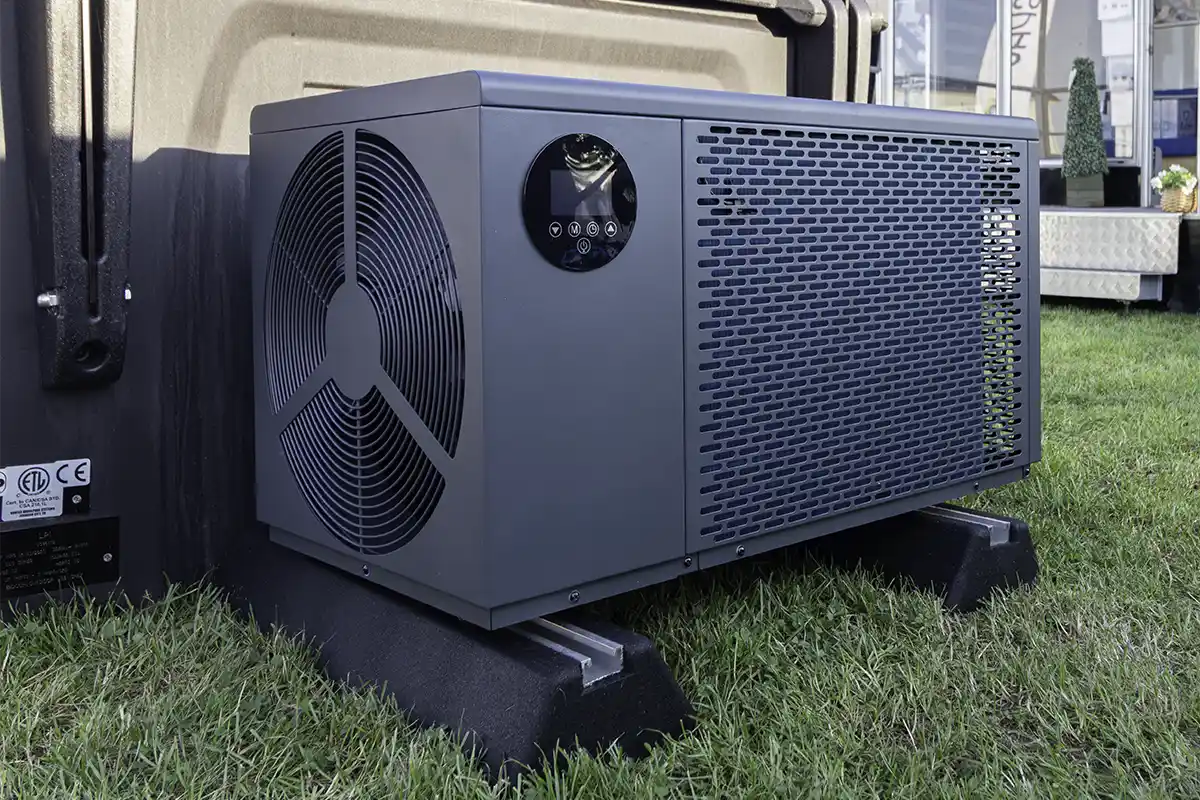
With quick turnaround times of guests, it can be a challenge to get the Hot Tubs temperature back up after a water change, but not with a Hot Tub heat pump. Every Tuff Spas model have pipework that is designed so it’s easy to have a Hot Tub heat pump fitted. All Tuff Spas, new and old are fully compatible with this excellent money saving equipment.
Reason 10 – The Brand New Model Range Covers Everything
Never a brand to be complacent and always looking for ways to improve, Tuff Spas have redesigned every model and built the whole range from brand new moulds with improved designs and better athletics.
In addition to the TT150 with twin facing loungers, we can now offer a same direction Twin Lounger in the all new Tuff Spas TT275.
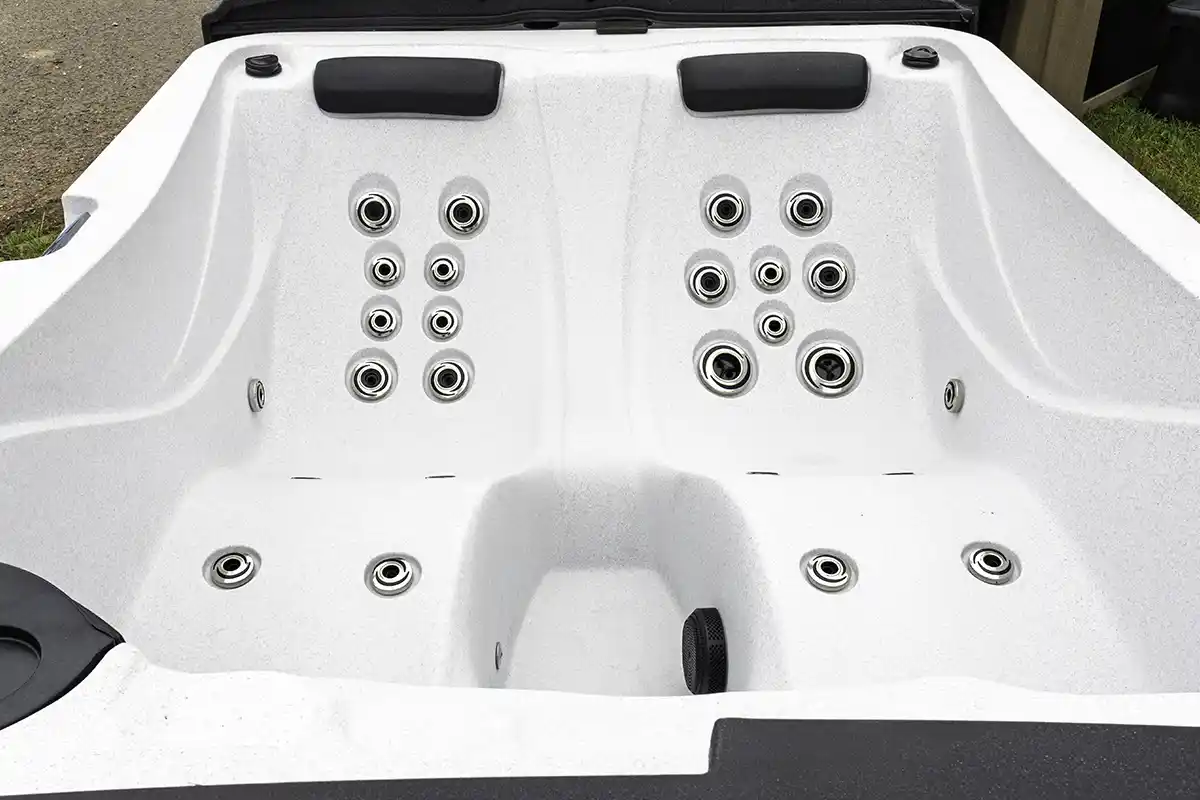
Tuff Spas Hot Tubs offer a unique combination of durability, luxury, and cost-effectiveness that make them an excellent choice for Holiday Lets or any other business setting. With their exceptional lids, durability, HSG282 compliance, and eco credentials, Tuff Spas can withstand years of heavy use without letting you down.
If you operate a holiday letting, it’s essential you know how to keep your hot tub and water well maintained. At our sister company, SpaTech Training, we provide technical, specialist and mandatory Health and Safety courses. Courses include the BISHTA Holiday Park Hot Tub Safe Operator Course, and BISHTA Water Hygiene Management Course.
Understanding HSG282 And Its Importance In Holiday Lets
Holiday lets with Hot Tubs present a unique set of challenges for owners. One such challenge is ensuring that their Hot Tubs comply with the Health and Safety Executive’s guideline HSG282.
Worrying there is a lot of miss-information and unsubstantiated claims relating to HSG282, often from unscrupulous Hot Tub businesses trying to pass off Hot Tubs as HSG282 compliant that clearly aren’t. Don’t worry though, we aren’t going to just make claims, we will quote directly from HSG282 so you can be assured that you’re getting the right information.
This article delves into what HSG 282 is, why it’s essential for Holiday Lets, and how owners can ensure themselves and their Hot Tubs meet the requirements.
What is HSG282?
HSG282 titled “The control of legionella and other infectious agents in spa-pool systems” is a set of guidelines issued by the UK’s Health and Safety Executive (HSE) for commercial spa-pool systems such as Hot Tubs. Introduced in 2017, the guidelines are designed to manage and control risks associated with infectious agent. For example legionella bacteria, which can cause potentially fatal diseases like legionnaires’ disease.
It’s important to note that HSG282 is not a legal requirement, however, it’s considered ‘best practice’ and provides an essential benchmark for health and safety. In the event of a legal dispute, HSG282 may be used to assess whether a holiday let owner has fulfilled their responsibilities under the Health & Safety at Work Act 1974.
14 Although only a court can give an authoritative interpretation of the law when considering the application of health and safety legislation, HSE and local authority (LA) inspectors expect employers to follow the guidance in the ACOP (Approved Code of Practice) or be able to demonstrate compliance with the law in some other way. This document gives specific guidance, in the context of spa-pool systems, to help dutyholders comply with the health and safety legislation set out in the ACOP.
For the health and safety of your guests, and to keep on the right side of the law, you need to follow the guidance. If you don’t you could be at risk of possible serious legal consequences.
Part 1 – What does HSG282 actually say is needed to be compliant?
We’ve read through the guidance and pulled out the parts most relevant to you. As mentioned earlier, we’re going to quote directly from the HSG282 guidance to be crystal clear what it required to be compliant.
Identifying and assessing the risk
34 Before any formal health and safety management system is implemented, the duty holder is responsible for ensuring a risk assessment is carried out to identify the possible risks. The purpose of the assessment is to enable a decision on:
- the risk to health, i.e. whether the potential for harm to health from exposure is reasonably foreseeable, unless adequate precautionary measures are taken.
- the necessary measures to prevent, or adequately control, the risk from exposure to legionella and other infectious agents. </em>
You need to do a risk assessment. If you’re reading this you’re probably already familiar with them.
37 The risk assessment enables the duty holder to show that they have considered all the relevant factors, and the steps needed to prevent or control the risk. The Appendix provides information on the key requirements when assessing the risks associated with spa-pool systems and further information is also available in BS 8580 Water quality. Risk assessments for Legionella control.8 The assessment should consider:
- the source and quality of the supply water, e.g. from the mains supply or an alternative.
While it may be obvious, it’s important to consider the water source you’re going to use to fill the Hot Tub. The best source is from the mains as it’s been treated and is safe for human consumption.
1 Stop Spas Tip – If you’re using a hosepipe, let it run for a short while before filling the Hot Tub, so only fresh water is used. If there is any water already in the hosepipe it may contain bacteria, especially in the summer where it can get very warm.
Competence
41 Inadequate management, lack of training and poor communication can be contributory factors in outbreaks of diseases, including legionnaires’ disease. It is important that everyone involved in the risk assessment and operation of the spa pool must be competent, trained, and aware of their responsibilities. The duty holder must ensure that suitable and sufficient information, instruction, and training are provided. Competence will be a product of sufficient training, experience, knowledge, and other personal qualities. Training, including refresher training, is an essential element of an employee’s capability to carry out work safely.
tyle=”font-weight: 400;”>>It’s extremely important that all staff members involved with the Hot Tub are trained and qualified. At first glance it may seem very simple, but there is a lot of important things to learn that can’t be self-taught. Certified courses such as BISHTA Water Hygiene Management from SpaTech training will give you everything you need.
Section 2: Types and settings
68 Where domestic-type spa pools are used as a business activity, the bather load is restricted to a discrete group of users.
Domestic-type spa pools – used as a business activity </span>
76 Domestic-type spa pools or hot tubs used as part of a business activity (e.g. in a holiday park rental unit or hotel bedroom(s) with their own dedicated spa, or as part of a rental agreement for a single family or group use) are subject to the general duties under the HSW Act. There is a legal requirement for these systems to be managed and controlled in proportion to the risk and the risk assessment should consider the type of pool and its use. Domestic-type spa pools are for use by a small, discrete group of people at any one time and are typically:
- of either a rigid or inflatable/foam-filled structure with freeboard and skimmer.
- systems where the water should be changed after each rental/week, whichever is the shorter.
- disinfected using bromine or chlorine through the use of an inline disinfectant feeder.
A full water change needs to happen between guests or at least once a week.
Chlorine or Bromine must be used as a sanitiser and through an inline feeder.
Important take away – ANY Hot Tub that doesn’t use either Chlorine or Bromine as a sanitiser isn’t HSG282 compliant. This includes most wood fired Hot Tubs.
Section 3: Design and commissioning
84 This section gives a description of the characteristics, design, construction, and commissioning of spa pools. They are designed in different shapes, sizes, and with different configurations of plant and equipment, and the setting in which they are intended to be used should be taken into account in the risk assessment. Spa pools, and any modifications made to them, should be designed with safe operation and maintenance in mind. In particular, all parts should be easily and safely accessible for all essential maintenance tasks and in a way that readily allows for cleaning and disinfection of all wet surfaces. Where spa pools with a higher bather load are sited indoors, consider the dehumidification/ventilation of the area around the spa pool.
Insulation in a Hot Tub must be removable to be HSG282 compliant. A Spa that was full foam insulation doesn’t allow access to all parts and isn’t HSG282 compliant.
Circulation
89 Spa pools and plant should be designed to achieve circulation and mixing of all the treated pool water with no stagnant areas and effective removal of water from the surface (where the bulk of the pollutants are). Spa pools should be designed with a surface draw-off of approximately 80% of the circulation volume. To maintain microbiological quality of the spa-pool water, the filter and pumps should be sized to provide a turnover of pool water that is suitable for the pool layout and operation at the limit of the anticipated bather load, which will typically be 6 minutes for commercial-type spa pools where bather load is high and 15 minutes for lower bather loads.</p>
No Dead legs – Features such as waterfalls that can be turned off a
ren’t HSG282 compliant. If any spa water can stay still, it can breed bacteria.
The Hot Tub should have at least one pump and filter. Any Hot Tub that doesn’t have these isn’t HSG282 compliant.
92 Figure 2 illustrates a typical freeboard and skimmer system – it shows how the water is drawn directly from the spa pool via the surface level skimmer to the filter. Water within the spa pool should be continually pumped through the filter and returned to the pool tank. There may also be a secondary circuit that draws water from the spa- pool footwell and pumps it back into the spa pool.
The Hot Tub should have at least one pump and filter. Any Hot Tub that doesn’t have these isn’t HSG282 compliant.

Pipework
93 Pipework should be designed to be readily accessible and removable for inspection and cleaning, with minimum length of pipe runs to avoid dead legs and reduce the surface area for microbial biofilm growth. As plastic pipework may readily support microbial growth, the materials chosen should minimise the risk. Flexible, internally corrugated piping should not be used as it increases the surface area for growth and can create areas that are difficult to clean. </span>
Reiterating that insulation must be removable. Pipework must be smooth inside rather than corrugated.
Filtration
95 Filtration is necessary to ensure adequate water clarity can be maintained through the removal of suspended particulate matter/debris in the water. Filtration is a means of entrapping particles mechanically and/or through absorption onto a filter medium. There are several types of system in common use, and the choice of system type and size should reflect the anticipated type of use, circulation rate and bather load. Spa pools will typically only require one filtration system but multiple units and types in sequence may be appropriate, depending upon the local circumstances.
To Be HSG282 compliant the Hot Tub must have a filtration system.
Commissioning
108 Commissioning is an essential step in ensuring that spa-pool systems operate safely from the outset. They should be commissioned to ensure they operate correctly and safely in accordance with the design parameters. It is essential that the commissioning process is carried out by competent people in a logical and defined manner and in full compliance with the supplier’s or installer’s instructions. It should include both the spa pool and any associated pipework and water treatment plant, where relevant.
109 The responsibilities of the staff carrying out the commissioning process should be clearly defined, with adequate time and resources allocated to allow the integrated parts of the installation to be commissioned correctly. The precautions taken to prevent or control the risk of exposure to legionella and other infectious agents during normal operation also apply to the commissioning process. It is important to note that a spa-pool system may harbour residual water and microbial contamination from pressure testing before leaving the manufacturer or supplier; this risk must be assessed and all components cleaned and disinfected as part of the commissioning process.
It’s extremely important that the Hot Tub is commissioned by a competent qualified professional.
Section 4: Operation and maintenance
Bather load
115 Each type of spa pool is designed to contain a maximum number of bathers at any one time, and this is an important determinant of satisfactory water quality during typical use of the spa pool. The risk assessment should consider the bather load to ensure satisfactory water quality and determine the operational actions. The number of bathers in the spa pool at any time should never exceed the number of seats or loungers provided in it.
116 The design bather load is the maximum number of bathers using the spa per hour (i.e. each hour is three periods of 15-minute bathing followed by a 5-minute rest period) and this should be stated and not exceeded. The design bather load should be approximately 10 times the capacity of water in the spa-pool system when measured in cubic metres, with a minimum of 250 litres per bather (for example a 5 m3 pool would have a design bather load of 50 bathers per hour).
There should be a minimum of 250 litres of water per bather.
Water quality
120 Effective water treatment relies on filtration working in conjunction with chemical disinfection. Filtration that is working effectively and efficiently contributes to maintaining the cleanliness, clarity, and safety of the water. Chemical disinfection is required to prevent microbial growth and reduce the risk of infection.
Reiterating that the Hot Tub must have filtration and chemical disinfection.
122 The turnover time is the time taken for the entire spa-pool water volume to pass through the filters and treatment plant and back to the spa pool. The maximum design water turnover time for lower bather loads is 15 minutes, and 6 minutes for commercial-type spa pools (where there are higher bather loads).
The filtration system of a HSG282 compliant Hot Tub must turn over the entire body of water in 15 minutes or less.
129 The pH, total alkalinity, total dissolved solids (TDS), temperature and calcium hardness of water are the main factors in determining the balance of the water. Balanced water is neither scale forming nor corrosive and may be measured using a number of indices (such as the Langelier Saturation Index or Ryznar Stability Index). Water balancing may not be required in spa pools with a higher bather load due to the frequency of water replacement and draining of the spa pool.
<strong>The water in the Hot Tub must be correctly balanced.
130 The most important factor in water balance is pH which should be maintained between pH 7.0–7.6. Depending on the nature of incoming mains water and the disinfectant used, the pH of the water may need to be adjusted by the use of chemical treatment to ensure the disinfectant remains effective (see Information box 4 Adjusting the pH).
The pH of the water must be between 7.0 & 7.6. Chemical treatments can be used to achieve this.
131 The TDS are the measure of the concentration of dissolved materials present in the water from the water treatment chemicals and bathers. The TDS of the spa-pool water should be no more than 1000 mg/l higher than the incoming fill water, above which corrosion of the water distribution system may become more apparent. Planned regular water replacement will normally prevent such occurrences.
Water changes should be done regularly enough to prevent TDS of the water exceeding 1000 mg/l higher than the incoming fill water.
Section 5: Testing and monitoring water quality
143 The risk from exposure to legionella and other infectious agents should be prevented or controlled and the precautions taken monitored to ensure they remain effective. This section gives guidance on monitoring the water quality in spa-pool systems, routine sampling and testing for the presence of bacteria. These combined factors will help to give an indication of whether control is being achieved.
The guidance given to monitor and control the water quality must be followed. &amp;amp;amp;amp;lt;/span>
147 Testing of water quality, using chemical and microbiological monitoring, is an essential part of the spa-pool treatment regime and may be carried out by the operator where they are suitably trained to do so, or by an external service provider.
Water monitoring and treatment should be carried out by a trained operator or by an external service provider.
148 Testing and recording of the chemical and microbiological parameters associated with the spa pool should be carried out and appropriate actions taken according to the results (see Tables 3 and 4). The test results should be provided in the form of a report which will form part of the record-keeping requirements.
Water testing parameters and actions detailed in the below tables. The results should be recorded for record keeping.
Chemical
149 The frequency and extent of the chemical testing should be determined by the risk assessment. Most testing can be done at poolside, but some specialist tests will require laboratory analysis.
s=”yoast-text-mark”>s=”yoast-text-mark”>s=”yoast-text-mark”>s=”yoast-text-mark”>s=”yoast-text-mark”>s=”yoast-text-mark”>e=”color: #29a9e1;”>A risk assessment should be conducted to determine the testing frequency. For example, the recommended frequency may need to be modified if there is particularly excessive use.
150 Testing of spa-pool water should capture normal variation of operating conditions, for example it should be carried out when the features are not operating as spa-pool water chemistry alters during activation of the booster jets, and ideally should also be carried out just after maximum use to ensure the treatment regime is working appropriately.
Testing shouldn’t be done when the Hot Tub is in use. It should be done just after maximum use.
For Hot Tubs in Holiday Lets these are the key parts and what often catch people out, however, we always recommend that you read the HSG 282 guidance in full.
The full HSG282 guidance is available here
Part 2 – Myths of HSG 282
Myth 1 – No Headrests
We hear this one a lot and it’s a head scratcher. Nowhere in HSG282 does it mention or even give the slightest suggestion that you can’t have headrests to be compliant, the opposite in fact.
It’s clearly stated and even gives the word Headrests in table 2 under part 133 of the Cleaning and disinfection section. As part of your cleaning routine, they just need to be removed and cleaned. This links with what is mentioned earlier in part 84, that all parts should be accessible for maintenance and cleaning.&amp;amp;amp;amp;lt;/span>
84 This section gives a description of the characteristics, design, construction, and commissioning of spa pools. They are designed in different shapes, sizes and with different configurations of plant and equipment, and the setting in which they are intended to be used should be taken into account in the risk assessment. Spa pools, and any modifications made to them, should be designed with safe operation and maintenance in mind. In particular, all parts should be easily and safely accessible for all essential maintenance tasks and in a way that readily allows for cleaning and disinfection of all wet surfaces. Where spa pools with a higher bather load are sited indoors, consider the dehumidification/ventilation of the area around the spa pool.
Table 2 Guidance on inspection and recommended actions

The truth – You can have Headrests and be HSG282 compliant.
Myth 2 – Wood fired Hot Tubs
With a rustic appearance, woodfired Hot Tubs are sometimes seen on Glamping sites. If you’ve read this far you will have learned about several parts of HSG 282 that most Wood fired Hot Tubs don’t come close to meeting. These include:
95 Filtration is necessary to ensure adequate water clarity can be maintained through the removal of suspended particulate matter/debris in the water. Filtration is a means of entrapping particles mechanically and/or through absorption onto a filter medium. There are several types of system in common use, and the choice of system type and size should reflect the anticipated type of use, circulation rate and bather load. Spa pools will typically only require one filtration system but multiple units and types in sequence may be appropriate, depending upon the local circumstances.
120 Effective water treatment relies on filtration working in conjunction with chemical disinfection. Filtration that is working effectively and efficiently contributes to maintaining the cleanliness, clarity, and safety of the water. Chemical disinfection is required to prevent microbial growth and reduce the risk of infection.
122 The turnover time is the time taken for the entire spa-pool water volume to pass through the filters and treatment plant and back to the spa pool. The maximum design water turnover time for lower bather loads is 15 minutes, and 6 minutes for commercial-type spa pools (where there are higher bather loads).
The Truth – Very few Wood fired Hot Tubs without major modification are HSG282 compliant.
Part 3 – What Do you Need To Do To Be HSG 282 Compliant?
1 – Do a Risk Assessment.
2 – Choose the right Hot Tub (HSG 282 compliant)
3 – Monitor and control water Quality.
4 – Keep Records
Compliance with HSG 282 is an essential aspect of managing a Holiday Let with a Hot Tub. While ensuring compliance might require some investment of time and resources, it is undoubtedly worthwhile for the safety of guests, the legal protection of the owner, and the reputation of the business.
Read More